
How mini-organs could reveal how infections lead to cancer
Researchers at Aarhus University will use laboratory-grown mini-organs to investigate how bacteria and viruses alter human tissue and increase the risk of cancer. The research is part of the European TagTIC project, which aims to identify new opportunities for cancer prevention and treatment.

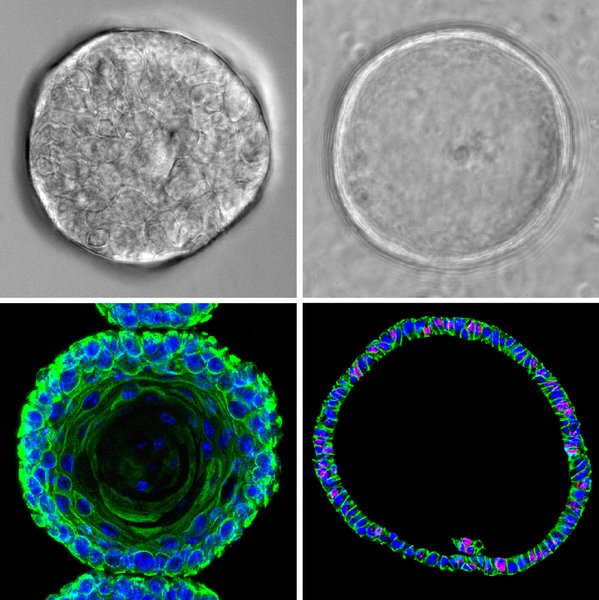
Most people associate cancer with genetic mutations, smoking or lifestyle factors. But bacteria and viruses can also play an important role. Certain infections can alter human tissue and create conditions that favour cancer development, yet researchers still know surprisingly little about how these changes occur.
To find answers, researchers at Aarhus University and partners across Europe will recreate the earliest stages of disease development in tiny laboratory-grown mini-organs known as organoids. The work is part of TagTIC, a European research project funded by the Horizon Europe Marie Skłodowska-Curie Actions programme with €4.3 million.
"We already know that certain infections can increase the risk of cancer, but we still don't fully understand what happens inside the tissue from the moment an infection takes hold until the first cancer-related changes begin to appear. Our organoid models now allow us to follow that process much more closely," says Associate Professor Cindrilla Chumduri from the Department of Biological and Chemical Engineering at Aarhus University.
Following cancer development cell by cell
Organoids are tiny three-dimensional models of human tissue grown in the laboratory. They are not miniature organs, but they reproduce many of the key biological features of tissues such as those found in the stomach and intestine.
This makes them a powerful research tool. By exposing organoids to disease-causing bacteria and viruses, researchers can observe how infections alter human tissue under conditions that closely resemble those in the body.
Instead of studying cancer only after it has developed, researchers can now follow the earliest stages of disease as they unfold.
"This means we can observe how infections affect individual cells, how the tissue responds, and which biological signals begin to change long before cancer develops. It gives us a much deeper understanding of the disease process," says Cindrilla Chumduri.
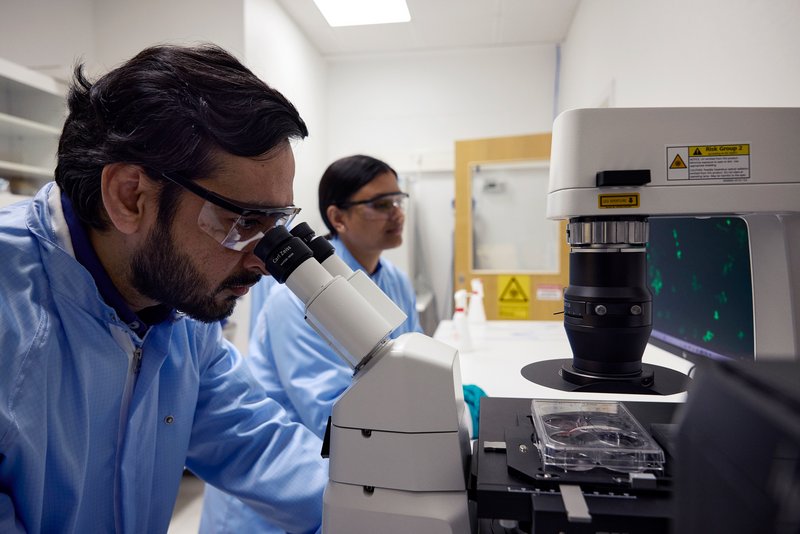
To capture these changes, the researchers combine organoid models with advanced microscopy, single-cell analysis, spatial omics technologies and bioinformatics. Together, these approaches make it possible to map how bacteria and viruses gradually reshape human tissue, cell by cell.
Researchers already know that microorganisms such as Helicobacter pylori, Fusobacterium nucleatum and Epstein–Barr virus are associated with gastric and colorectal cancers. However, an association alone does not explain what is actually happening inside the tissue.
That is precisely the question the researchers now aim to answer.
Using organoids, they can recreate infections under controlled laboratory conditions and investigate how microorganisms influence tissue architecture, immune responses and cancer-related signalling pathways. Their goal is to identify the earliest biological changes that make tissue more susceptible to cancer.
By understanding these processes, researchers hope to pave the way for earlier diagnosis, more targeted treatments and, ultimately, new strategies to prevent infection-associated cancers from developing.
Mini-organs bridging the gap between the laboratory and the clinic
At Aarhus University, Cindrilla Chumduri's research group has developed advanced organoid models that make it possible to recreate infections in human tissue and study how they contribute to cancer. This expertise is a key part of the European TagTIC project, which brings together researchers, clinicians and industry partners from six European countries.
Together, the partners aim to uncover how infection-associated cancers develop and identify new opportunities for prevention and treatment.
The project combines organoid technology with advanced imaging, artificial intelligence and drug discovery to translate new biological insights into future diagnostic tools and treatment strategies.
"Organoids create an important bridge between laboratory research and future clinical applications. They allow us to study disease processes in human tissue in ways that were simply not possible before, bringing us closer to developing solutions that may ultimately benefit patients," says Cindrilla Chumduri.
About the Chumduri Research Group
The Chumduri Research Group at Aarhus University develops advanced organoid and assembloid models to investigate how infections reshape human tissues and contribute to disease/cancer development. By integrating tissue engineering, infection biology, spatial and single-cell omics, high-resolution imaging, bioinformatics, and machine learning, the group studies disease mechanisms at cellular resolution and collaborates widely across Europe.
Contact
Associate Professor Cindrilla Chumduri
Department of Biological and Chemical Engineering, Aarhus University
Email: cindrilla.chumduri@bce.au.dk
Tlf.: +4520804229