
Bacteria could help remove PFAS from wastewater
Researchers at Aarhus University are developing a new approach to breaking down PFAS, pharmaceutical residues and other micropollutants in wastewater by harnessing the chemistry naturally produced by bacteria. Their long-term goal is a more affordable and sustainable technology that could be integrated into existing wastewater treatment plants.

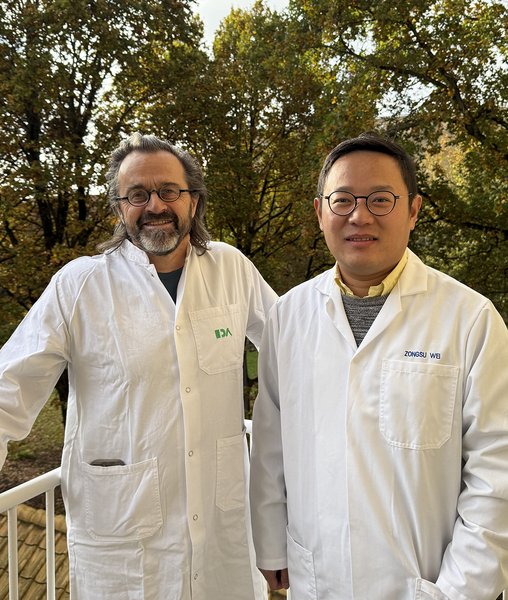
Researchers at Aarhus University have received DKK 7.2 million (approximately EUR 1 million) from the Independent Research Fund Denmark to develop a new method that uses bacteria to help break down PFAS and other persistent pollutants in wastewater.
The project brings together expertise in environmental microbiology and water chemistry at the university's Department of Biological and Chemical Engineering. The researchers aim to harness bacteria's natural ability to produce highly reactive chemical compounds capable of attacking a range of pollutants, including PFAS and pharmaceutical residues.
“We want to develop a process in which bacteria produce the chemicals needed to break down pollutants that conventional wastewater treatment struggles to remove. PFAS is an important target, but we also want to investigate whether the same approach can tackle pharmaceutical residues and other micropollutants,” says Professor Barth F. Smets, who leads the project.
Letting bacteria do the chemistry
PFAS are a large group of synthetic chemicals that have spread throughout soil and aquatic environments. Many are exceptionally difficult to break down because of the strong bonds between carbon and fluorine atoms.
Existing treatment methods, such as activated carbon and membrane filtration, can remove PFAS from water. However, they generally do not destroy the chemicals. Instead, they capture and concentrate them in filters or waste streams that require further treatment or disposal.
PFAS are not the only pollutants that pose a challenge for wastewater treatment. Pharmaceutical residues and other micropollutants can also pass through conventional treatment processes and end up in the aquatic environment.
The researchers hope that the reactive compounds produced by bacteria could offer a way to break down several types of pollutants within the same treatment process.
When certain bacteria process nitrogen compounds, they produce reactive oxygen and reactive nitrogen species, known as ROS and RNS. These highly reactive substances can interact with other molecules and alter their chemical structure.
Professor Barth F. Smets has previously demonstrated that bacteria generate these reactive compounds. Meanwhile, Associate Professor Zongsu Wei has shown that reactive nitrogen species can break down PFOA, a well-known PFAS compound, in a laboratory-based chemical system.
The challenge now is to bring the two processes together.
“We know that bacteria can produce these reactive compounds, and we have demonstrated that the compounds can break down PFOA in a chemical system. But recreating the necessary conditions using bacteria will be difficult. In fact, that is the biggest scientific challenge of this project,” says Zongsu Wei.
Building on existing wastewater treatment processes
The researchers will use specialised bioreactors in which bacteria grow in thin layers known as biofilms. By controlling the supply of oxygen and nutrients, they will investigate how to maximise the bacteria's production of reactive compounds.
The aim is to develop a process in which bacteria remove nitrogen - a pollutant in its own right - from wastewater while also generating chemicals capable of breaking down PFAS and other micropollutants.
“We are not trying to teach bacteria to eat PFAS or other pollutants. Instead, we want to use their natural metabolism to produce compounds that can attack these substances. What makes this approach particularly interesting is that it builds on biological processes already used in wastewater treatment,” says Barth F. Smets.
The researchers will investigate how effectively the method works on different PFAS compounds and other priority pollutants, including pharmaceutical residues. They will also identify the substances formed during degradation to assess whether the process creates potentially harmful by-products.
In the longer term, the team hopes to integrate the technology into existing wastewater treatment plants. If bacteria can generate sufficient quantities of reactive compounds during conventional biological treatment, the approach could reduce the need for more energy-intensive chemical treatment processes.
“If we succeed, this could provide a new, more resource-efficient way to break down PFAS and other persistent pollutants. But first, we need to demonstrate that bacteria can produce enough of the reactive compounds for the process to work effectively,” says Zongsu Wei.
Contact
Professor Barth F. Smets
Department of Biological and Chemical Engineering, Aarhus University
Mail: bfsm@bce.au.dk
Tel.: +4524217034
Associate Professor Zongsu Wei
Department of Biological and Chemical Engineering, Aarhus University
Mail: zwei@bce.au.dk
Tel.: +4593522047
Jesper Bruun
Journalist
Mail: bruun@au.dk
Tel.: +4542404140